
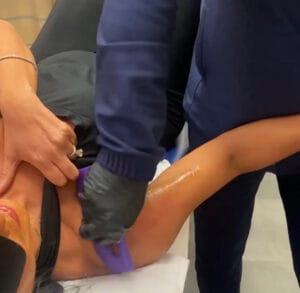
“Scraping” is the everyday name for Instrument-Assisted Soft Tissue Mobilization, or IASTM. A physical therapist uses a smooth, usually stainless-steel tool to apply pressure and friction across muscle, fascia, and tendon. Graston Technique is the best-known branded version, though a few different tool systems do basically the same thing.
The point isn’t to scrape anything off. It lets a therapist feel and treat tight or restricted
tissue more precisely than hands alone, while also boosting blood flow to the area.
Where Scraping Therapy Came From
This idea traces back to Gua Sha, a technique used in traditional Chinese medicine for centuries, “gua” means to scrape, “sha” refers to the redness that shows up after treatment.
The version most PT clinics use today came out of the 1990s. An amateur athlete, frustrated
with how slowly he was recovering from a knee injury, built a set of stainless-steel tools himself. He worked with researchers to refine the design, and it eventually became Graston Technique, which is now taught in certification courses and used across sports medicine and physical therapy.
What Are the Benefits?
1) Breaks down scar tissue and fascial restrictions left over from an injury or surgery
2) Increases blood flow to the treated area, supporting healing
3) Improves range of motion in areas that feel stuck or tight
4) Works alongside manual therapy and exercise, it’s rarely used by itself
5) Worth being upfront: scraping isn’t a cure-all, and it’s not right for every injury. It’s one tool in a bigger plan, not a replacement for one.
Who Actually Benefits From This?
We reach for IASTM most often with patients dealing with:
1) Tennis elbow or golfer’s elbow
2) Achilles tendinopathy
3) Plantar fasciitis
4) IT band syndrome
5) Scar tissue after surgery
6) Chronic tightness that hasn’t responded to stretching or foam rolling
What Happens During a Session
It’s usually a few minutes within a longer visit. Your PT checks the area, then works the tool across it with pressure based on how tight the tissue is and what you can tolerate. Some redness afterward is normal, it means blood flow increased, not that anything got damaged, and it usually fades within a few hours to a day.
Scraping therapy shows up outside the clinic too. Owner and founder Joe Zarett has worked with NBC10 Philadelphia news anchor Jacqueline London, using IASTM as part of her treatment, the same technique our team uses with patients every day.
Scraping Therapy at Zarett Rehab & Fitness
At Zarett, scraping therapy Philadelphia patients receive is built into a plan around your specific injury, never a one-size-fits-all thing. If something’s been nagging at you and stretching or rest hasn’t fixed it, it’s worth bringing up at your next visit.
Ready to see if scraping therapy is right for you? Schedule an evaluation with our Philadelphia team today.

