
Desk Posture Tips From a Philadelphia Physical Therapist
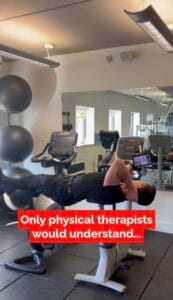
Desk posture advice usually says to sit up straight. The research points elsewhere: no single position prevents pain, and changing positions during the day matters more. In our latest Instagram video, our team shows a standing setup at the computer that keeps you from hunching over the screen.
Why Hunching Gets Blamed
Long computer sessions load the neck and shoulders, and hunching forward is the usual suspect. The evidence that forward head posture causes pain is mixed. Some studies find a link and others find little. What shows up more consistently is time. Reviews of office workers link long sedentary stretches to a higher risk of low back and neck and shoulder pain.
What the Video Shows
The video shows a standing setup at the computer that keeps you from hunching over the screen. It’s one position to use, not the one correct position. Staying in any posture for hours, including a good one, can leave you stiff.
Standing Desks and Changing Positions
A meta-analysis of sit-stand workstations concluded they may reduce low back pain among workers. The authors noted two gaps. Studies haven’t settled how much sitting versus standing works best, and few include people who already have low back pain. Standing all day isn’t the goal. Alternating between sitting, standing, and walking is.
How to Set Up Your Desk Posture
Better desk posture comes from a setup that makes changing positions easy:
1) Raise the screen so you look straight ahead instead of down.
2) Keep the keyboard close so your shoulders stay relaxed.
3) Support your feet on the floor or a footrest when you sit.
4) Switch between sitting, standing, and walking through the day, and take short breaks.
No single desk posture prevents pain, so treat these as starting points and adjust to what feels sustainable.
Exercises for Desk Workers
A systematic review of 27 trials found moderate-quality evidence that neck and shoulder strengthening reduced neck pain in office workers who already had neck symptoms. It didn’t show a benefit for office workers in general. If your neck or shoulders ache by midday, targeted strengthening may help more than a new chair.
When to See a PT
See a PT if neck, shoulder, or back pain lasts more than a few weeks or keeps coming back. Numbness or tingling in the arm or hand, or pain after an injury, needs a medical evaluation. Feel free to schedule an appointment with us.

Mikael La Ferla
Mikael La Ferla is the Marketing Manager at Zarett Rehab & Fitness, a physical therapy and fitness clinic in Philadelphia. He writes about physical therapy, injury recovery, and staying active in Philadelphia, working with Zarett’s physical therapists to turn clinical expertise into practical guidance for patients. Mikael holds an MBA from Rutgers University and is also a Senior Accountant at PMC Property Group, bringing a background in finance to his work in healthcare marketing. Outside the office, he enjoys cooking and playing squash.
