
Frozen Shoulder Physical Therapy in Philadelphia
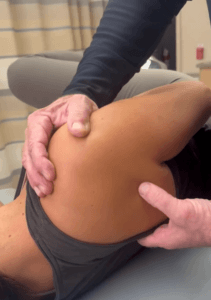
Frozen shoulder, also called adhesive capsulitis, makes the shoulder painful and stiff. Frozen shoulder physical therapy focuses on restoring motion, and it’s something our team does for patients every week. In our latest Instagram video, Joe Zarett works with Tiffany, a patient with frozen shoulder, through shoulder and rotation movements.
What Frozen Shoulder Is
The shoulder joint sits inside a capsule of connective tissue. In frozen shoulder, that capsule thickens and tightens, which limits movement. Mayo Clinic says it’s unclear why this happens to some people. Symptoms start slowly, get worse, then typically improve within 1 to 3 years.
The Three Stages
1) Freezing: any movement causes pain, and the shoulder loses range. This stage typically lasts 2 to 9 months.
2) Frozen: pain may lessen, but the shoulder gets stiffer and harder to use. This stage typically lasts 4 to 12 months.
3) Thawing: motion begins to improve. This stage typically lasts 5 to 24 months.
For some people, pain gets worse at night and interrupts sleep. Stage lengths vary from person to person.
Who Gets It
People 40 and older get frozen shoulder more often, particularly women. Keeping a shoulder still raises the risk, which can happen after surgery, a broken arm, a rotator cuff injury, or a stroke. Diabetes, thyroid conditions, heart disease, and Parkinson’s disease also raise it. The Cleveland Clinic reports that 10% to 20% of people with diabetes develop it.
How Frozen Shoulder Physical Therapy Works
The orthopaedic physical therapy guideline published in JOSPT recommends teaching patients stretching exercises, based on moderate evidence. It also supports corticosteroid injections combined with mobility and stretching for short-term pain relief and function. Injections are a physician’s decision. Mayo adds that surgery is rarely needed.
Frozen shoulder physical therapy often starts with an exam of how far the shoulder moves on its own and with help, where pain starts, and which health conditions are in the picture. Treatment may include hands-on mobilization, stretching, and a home program. Intensity follows how irritable the shoulder is at that stage.
Joe’s work with Tiffany in the video is an example. Shoulder and rotation movements are often used to restore range. Results vary by stage and person.
Frozen Shoulder Physical Therapy at Zarett
See a PT or physician if shoulder stiffness limits reaching, dressing, or sleeping and doesn’t ease within a few weeks. Other shoulder problems can look similar, so an exam sorts out the cause. Shoulder pain with chest pressure or shortness of breath, or after a fall, needs urgent medical care. Feel free to schedule an appointment with us.

Mikael La Ferla
Mikael La Ferla is the Marketing Manager at Zarett Rehab & Fitness, a physical therapy and fitness clinic in Philadelphia. He writes about physical therapy, injury recovery, and staying active in Philadelphia, working with Zarett’s physical therapists to turn clinical expertise into practical guidance for patients. Mikael holds an MBA from Rutgers University and is also a Senior Accountant at PMC Property Group, bringing a background in finance to his work in healthcare marketing. Outside the office, he enjoys cooking and playing squash.
