Why Exercise is the Missing Link in Weight Loss Quality
The rise of GLP-1 receptor agonists like Ozempic, Wegovy, and Mounjaro has revolutionized weight management.
However, losing weight is only half the battle; the quality of that weight loss determines your long-term health, metabolic rate, and physical capability.
At Zarett Rehab & Fitness, we specialize in ensuring that as the pounds come off, your strength and vitality go up. If you are new to our clinical approach, you can learn more about what to expect from the best physical therapy clinic in Philadelphia and how we integrate medical-grade fitness into your healthcare journey.
Table of Contents
- What is GLP-1?
- How Zarett Rehab Approaches GLP-1 for Our Clients
- Advantages and Disadvantages of GLP-1
- The Science: Clinical Trials and Research Overview
- FAQ: Everything You Need to Know
What is GLP-1?
Glucagon-like peptide-1 (GLP-1) is a hormone naturally produced in the body that regulates appetite and blood sugar. GLP-1 medications mimic this hormone, slowing gastric emptying and signaling the brain that you are full.
While highly effective for shedding pounds, clinical data shows that without structured intervention, a significant portion of that weight loss comes from vital lean muscle mass.
Because the body is in a deep caloric deficit, it often looks to muscle tissue for energy, leading to “muscle wasting” if not paired with resistance training.
At its core, GLP-1 is a metabolic powerhouse that requires a proactive physical strategy to ensure the weight you lose is the weight you want to lose.
How Zarett Rehab Approaches GLP-1 for Our Clients
We don’t just focus on the scale; we focus on your Body Composition. For patients on GLP-1, Zarett provides comprehensive, personalized programs designed to preserve lean mass, improve functional capacity, and increase endurance. This is where physical therapy and exercise physiology meet to create a safer, more effective weight loss result.
Our coordinated approach includes:
- Movement Assessments: Conducted by licensed physical therapists to identify baseline stability and mobility.
- Individualized Strength Training: Programs tailored to your medical history and any musculoskeletal conditions identified during evaluation.
- Joint-Friendly Resistance Training: Progressive loading that protects your joints while forcing muscle retention.
- One-on-One Sessions: Direct supervision by Exercise Physiologists to ensure every rep counts toward preserving your metabolism.
Advantages and Disadvantages of GLP-1
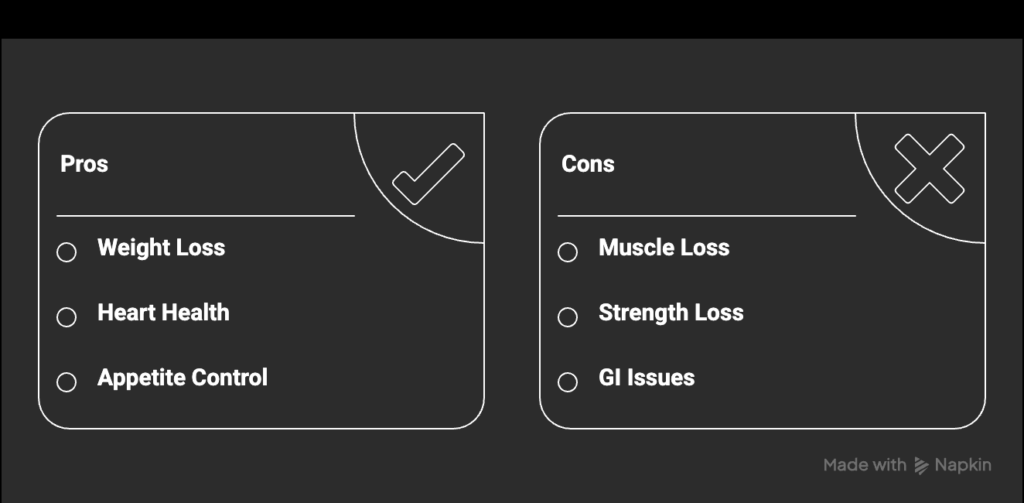
While GLP-1 medications offer a breakthrough in treating obesity and metabolic dysfunction, they are not without trade-offs.
Understanding the balance between rapid weight loss and physiological maintenance is key to a successful journey. Here is a breakdown of the primary benefits and the challenges patients may face:
Advantages:
- Significant Weight Loss: Clinical trials show 15–20% body weight reduction.
- Cardiovascular Health: Improved blood pressure and reduced risk of major heart events.
- Appetite Control: Elimination of “food noise” and cravings.
Disadvantages:
- Muscle Loss: Research indicates 20–30% of weight lost on GLP-1s can be lean muscle.
- Decreased Functional Strength: Losing muscle leads to lower “relative strength,” making daily tasks harder.
- Gastrointestinal Issues: Nausea and fatigue can make starting an exercise routine difficult without professional guidance.
The Science: Clinical Trials and Research
Recent high-level clinical evidence highlights why the “Zarett Method” is essential for GLP-1 users:
1. The Muscle Loss Reality Meta-analyses of over 22 randomized controlled trials (Wang L. et al., 2025; Wang B. et al., 2025) confirm that lean mass loss is a significant side effect of GLP-1 treatment. These studies found that:
- Lean body mass decreased significantly across all GLP-1 drugs.
- Approximately 25% of total weight loss was attributed to lean tissue rather than fat.
2. The Power of Combination: The S-LiTE Trial Research published in JAMA Network Open (Sandsdal et al., 2023) and The Lancet Healthy Longevity (Jensen et al., 2026) compared GLP-1 use alone versus GLP-1 plus exercise:
- Body Composition: The “Exercise + GLP-1” group reduced abdominal fat by 6.1%, nearly double the results of the medication-only group.
- Relative Strength: The combination group saw a +3.3% increase in strength, while those on a placebo saw a nearly 8% decline.
- Functional Mobility: Stair climb performance improved significantly (1.2 seconds faster) only when exercise was included.
The verdict?
While GLP-1 medications are a powerful catalyst for weight loss, the clinical data is clear: medication alone often leads to significant muscle wasting and diminished physical function.
To achieve high-quality weight loss—where you lose fat but gain strength—structured, medical-grade exercise is not just a recommendation; it is a necessity.
By pairing GLP-1 with the intentional programming at Zarett Rehab, you ensure that your weight loss journey results in a body that is not only smaller but stronger and more resilient.
FAQ
1. Is GLP-1 best for weight loss? GLP-1 is a powerful tool, but it is a “catalyst” rather than a total solution. When used alone, the metabolic rate often drops due to muscle loss.
When paired with the specific, intentional exercise provided at Zarett, patients achieve “High-Quality Weight Loss”—dropping fat while maintaining the muscle that keeps the weight off long-term.
2. Is GLP-1 the same as Ozempic? Ozempic is a brand name for Semaglutide. While Ozempic is FDA-approved for Type 2 Diabetes, Wegovy is the same drug approved specifically for chronic weight management.
3. How can I increase my GLP-1 naturally? You can support natural production by consuming high-fiber foods, lean proteins, and healthy fats, which trigger the natural release of the hormone in the gut.
4. Why is physical therapy important while taking GLP-1? Rapid weight loss can change your center of gravity and weaken stabilizing muscles. Our physical therapists ensure your joints stay protected and your movement patterns remain efficient as your body changes. This clinical oversight is a hallmark of massage therapy and rehab programs that prioritize structural integrity.
5. Will I gain the weight back if I stop the medication? Studies suggest weight regain is common after stopping GLP-1s. However, building muscle mass through resistance training at Zarett helps maintain a higher resting metabolic rate, which is your best defense against weight regain.
6. I feel fatigued on my medication; can I still exercise? Yes. Fatigue is a common side effect, which is why one-on-one supervision is vital. We adjust the intensity of your sessions to match your energy levels while still providing the stimulus needed to protect your muscles.
7. Does Zarett provide the medication? No, we are a rehabilitation and fitness facility. We work in tandem with your prescribing physician to provide the physical programming necessary to make the medication more effective and safer.
8. What is “Ozempic Face” or “Ozempic Butt” and can exercise help? These terms refer to the sagging skin or loss of shape caused by rapid loss of subcutaneous fat and muscle. While we cannot change skin elasticity, building the underlying muscle helps fill out the frame and provides a more toned, healthy appearance.